
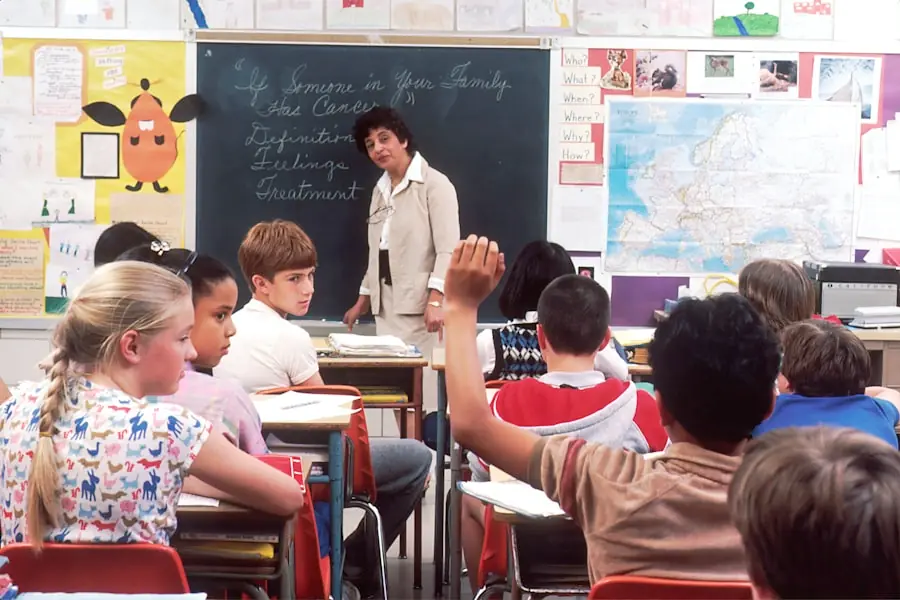
Your child is approaching school age. You wonder if they can manage a classroom. You worry about the noise, the unstructured time, the expectations, the other children. You wonder if they are "ready."
Here is the most important thing to understand before you read anything else.
In most countries, autistic children have a legal right to free, appropriate public education with individualized supports. The school's job is to adapt — to provide the right environment, the right accommodations, the right support staff — so that your child can access learning. "Not ready for school" is not a gatekeeping standard. It is a signal to increase support.
Skills That Actually Help — Focus Here
Rather than trying to make your child conform to a neurotypical readiness checklist, focus on these functional skills that genuinely ease the transition.
Understanding the IEP: Your Child's Legal Anchor
In the United States, the Individuals with Disabilities Education Act (IDEA) guarantees every eligible child a Free Appropriate Public Education (FAPE) with an Individualized Education Program. Similar frameworks exist in the UK (EHCP), Australia (NDIS school support), Canada, and many other countries.
Outside the US: families in the UK request an EHCP (Education, Health and Care Plan) through the local authority. Families in Australia can access school support through NDIS and the school's learning support team. Check your country's specific process with a parent advocacy organization.
Questions to Ask Before the First Day
Meet with the school before enrollment — not after problems arise. Ask specifically:
- Does this school have a special education coordinator or inclusion specialist on staff?
- What is your process for supporting a child through sensory overload or meltdown in the classroom?
- Is there a quiet space the child can use when overwhelmed? What does the sensory environment look like?
- How do you communicate with parents — daily notes, weekly updates, or only when problems occur?
- What AAC devices or communication supports does the school have experience with?
- Has the class teacher had training in autism support strategies? Will there be a teaching assistant in the room?
Home Preparation: 6 Weeks Before School Starts
-
1
Visit the school building twice. Walk the route from drop-off to classroom. Sit in the empty classroom. Meet the teacher informally. Familiarity with the physical environment reduces first-day anxiety significantly.
-
2
Build a visual schedule of the school day. Use photos or simple drawings. Practice it at home. Knowing what comes next is one of the most powerful anxiety reducers for autistic children.
-
3
Practice the morning routine under time pressure. Getting ready, eating, and leaving by a specific time — do this for 2–3 weeks before school starts. Rushed mornings cause dysregulation that follows children into the classroom.
-
4
Write an "All About Me" document for the teacher. One page: strengths and interests, communication style, key triggers, what helps when distressed, what the child finds rewarding. More useful than a diagnostic report alone.
-
5
Practice brief separations with trusted adults. If your child is not used to being with people outside the family, short practice sessions with a relative or trusted caregiver reduce separation anxiety at school drop-off.
-
6
Plan for exhaustion after school. School is cognitively and socially demanding for autistic children in ways it may not be for peers. Many autistic children need quiet decompression time immediately after school. Build this into the routine — it is not optional.
A Note About Inclusion
Research by Odom et al (2004) and multiple subsequent studies has consistently found that autistic children in inclusive classroom settings show better social skill development and language outcomes than those in fully segregated settings — when appropriate support is provided. Inclusion without support is not inclusion; it is abandonment. Inclusion with appropriate support is the evidence-based default.
Your goal in advocacy is not just placement in a mainstream classroom — it is appropriate support within that placement. Both matter.
Sources & Further Reading
- Individuals with Disabilities Education Act (IDEA). U.S. Department of Education. idea.ed.gov.
- Odom SL et al. Preschool inclusion in the United States. J Early Interv. 2004;26(2):73–80.
- Strain PS, Bovey EH. Randomized, controlled trial of the LEAP model of early intervention for young children with ASD. Topics Early Child Spec Educ. 2011;31(3):133–154.
- Carter EW et al. Peer support interventions for students with ASD. J Autism Dev Disord. 2016;46(7):2346–2360.
- Kasari C et al. Randomized controlled caregiver mediated joint engagement intervention for toddlers with autism. J Child Psychol Psychiatry. 2010;51(5):522–531.
Build the Evidence for Your Child's School Support
Nesto's parent report gives you documented observations of your child's communication, behavior, and development — the kind of specific evidence that supports a strong IEP discussion.
Start Free Screening